Two-Wheeler Loan Guide: Interest Rates, Eligibility, Documents and EMI
Introduction
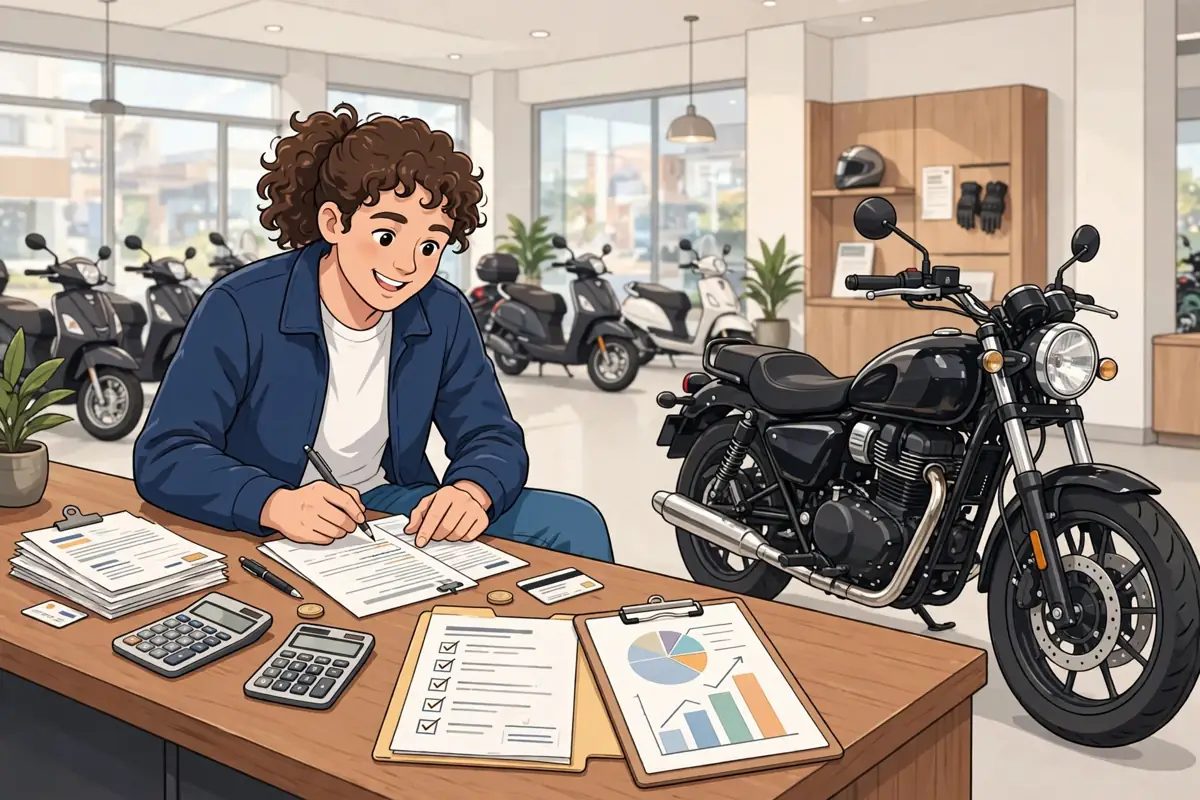
Short answer: A two-wheeler loan lets you buy a scooter or motorcycle by paying only a part of the price upfront and repaying the rest in monthly EMIs over 12 to 60 months. Most lenders finance 80 to 100 percent of the on-road price, charge interest of roughly 9 to 20 percent per year depending on your credit profile and the vehicle, and ask for basic identity, address, income, and bank documents. If you choose a loan with a low total cost, a comfortable EMI, and no hidden charges, a bike loan can be a practical way to own a vehicle without draining your savings.
For many buyers in India, a two-wheeler is not a luxury. It is how they get to work, college, or their business every day. Saving the full on-road price can take months or years, and prices have risen with better engines, safety features, and electric options. A loan bridges that gap. The risk is not borrowing itself, but borrowing badly: picking a high interest rate, stretching the tenure too long, or ignoring processing fees, insurance costs, and prepayment rules. This guide explains how two-wheeler loans work, who can get one, what they really cost, and how to choose one wisely.
Key takeaways:
- A two-wheeler loan usually covers 80 to 100 percent of the on-road price, including registration and insurance in many cases.
- Interest rates vary widely, so comparing two or three lenders can save you thousands of rupees over the loan.
- Your credit score, income stability, and down payment all affect the rate and the amount you are approved for.
- A shorter tenure means a higher EMI but much lower total interest; a longer tenure does the opposite.
- Always compare total cost, not just the EMI: processing fees, foreclosure charges, and insurance matter.
- Check whether the loan is for a new or used vehicle, because terms, rates, and maximum age limits differ.
What Is a Two-Wheeler Loan?
A two-wheeler loan is a secured loan used to buy a scooter, motorcycle, or electric two-wheeler. The vehicle itself acts as security for the lender until the loan is repaid. You pay a down payment, which is the part of the price not covered by the loan, and the lender pays the rest directly to the dealer. You then repay the borrowed amount plus interest in equal monthly instalments, called EMIs.
Most two-wheeler loans are for new vehicles, but some banks and non-banking finance companies also finance used bikes, usually up to a certain age of the vehicle. Loan amounts typically range from Rs 20,000 to Rs 3 lakh or more for premium motorcycles, depending on the lender and your eligibility. Tenures are shorter than home or car loans, commonly one to five years, because two-wheelers are lower-value assets that lose value faster.
Unlike a personal loan, which can be used for anything, a two-wheeler loan is tied to a specific vehicle. That usually means a lower interest rate than an unsecured personal loan, because the lender has the vehicle as security. It also means the lender may require comprehensive insurance and registration in your name before disbursing the money.
Who Can Get a Two-Wheeler Loan? Eligibility Explained
Eligibility is generally simpler than for a home loan, but lenders still check that you can repay. Salaried employees, self-employed professionals, business owners, and in some cases students with a co-applicant can apply. The usual age range is 18 to 65 years at the end of the loan, although exact limits vary by lender. A steady income, a bank account with regular transactions, and a decent credit history all help.
Your credit score matters more than many first-time buyers expect. A score of 750 or above usually gets you the best rates and faster approval. A lower score does not always mean rejection, especially for smaller loan amounts, but you may be offered a higher rate or asked for a larger down payment. If you have no credit history at all, a smaller loan repaid on time is a good way to build one, provided you are confident about the EMI.
| Factor | What lenders usually look for | Why it matters |
|---|---|---|
| Age | 18 years or above; loan ends before 65 to 70 | Ensures you are legally able to borrow and repay |
| Income | Stable monthly income, often Rs 10,000 to Rs 15,000 minimum | Shows you can afford the EMI alongside other expenses |
| Credit score | 750 or above preferred; lower scores may still qualify | Affects approval, interest rate, and loan amount |
| Employment | Salaried or self-employed with proof of work | Confirms income stability over the loan tenure |
| Down payment | Usually 0 to 20 percent of the on-road price | Reduces the amount borrowed and the lender’s risk |
Two-Wheeler Loan Interest Rates and Charges
Interest rates on two-wheeler loans in India commonly range from about 9 percent to 20 percent per year, with some offers outside that range for premium bikes, used vehicles, or weaker credit profiles. Banks often quote lower rates than finance companies, but finance companies may approve faster and with simpler documents, especially at dealerships. Always ask whether the rate is fixed or reducing-balance based, and confirm the exact rate in writing before signing.
Charges beyond interest can add up. The processing fee is commonly 1 to 2 percent of the loan amount, sometimes with a minimum amount. Some lenders charge documentation fees, stamp duty, and a late payment fee if an EMI is missed. Foreclosure or prepayment charges, where applicable, matter if you plan to repay early. A loan that looks cheap on interest alone can become expensive once these charges are added, so ask for the full schedule of charges and the total amount you will repay.
EMI Examples: What Will You Actually Pay?
Your EMI depends on three things: the loan amount, the interest rate, and the tenure. A higher loan or rate raises the EMI; a longer tenure lowers it but increases total interest. The table below shows approximate EMIs for a Rs 1 lakh loan at different rates and tenures. These are illustrations, not quotes, and your actual EMI will depend on the lender’s offer.
| Loan amount | Interest rate | Tenure | Approximate EMI | Approximate total interest |
|---|---|---|---|---|
| Rs 1,00,000 | 12 percent | 24 months | Rs 4,707 | Rs 12,968 |
| Rs 1,00,000 | 12 percent | 36 months | Rs 3,321 | Rs 19,556 |
| Rs 1,00,000 | 15 percent | 36 months | Rs 3,467 | Rs 24,812 |
| Rs 1,00,000 | 15 percent | 48 months | Rs 2,773 | Rs 33,104 |
Notice how stretching a loan from 36 to 48 months cuts the EMI but adds roughly Rs 8,000 to Rs 9,000 in interest on just Rs 1 lakh. On a Rs 1.5 lakh or Rs 2 lakh bike, that difference is much larger. The right tenure is the shortest one whose EMI you can pay comfortably every month, even in a bad month, without cutting essentials or borrowing elsewhere.
Documents Required for a Two-Wheeler Loan
Documentation is usually straightforward. You will need identity proof such as Aadhaar or PAN, address proof, and passport-size photographs. Salaried applicants are generally asked for salary slips for the last few months and bank statements. Self-employed applicants may need income tax returns or business proof. The dealer usually helps with the vehicle quotation, registration papers, and insurance, which the lender needs before disbursement.
Keep copies of everything you sign, including the loan agreement, the EMI schedule, and the insurance policy. Note the loan account number, the EMI date, and the lender’s customer care number in a safe place. If you change your bank account or phone number, inform the lender immediately so that EMIs are not missed.
How to Apply for a Two-Wheeler Loan, Step by Step
First, decide your budget, including the on-road price, insurance, and running costs, not just the showroom price. Second, check your credit score and correct any errors in your credit report before applying. Third, compare offers from your bank and at least one or two other lenders or finance companies, looking at rate, fees, tenure, and prepayment rules. Fourth, choose a down payment you can afford without emptying your emergency savings. Fifth, apply with complete documents, read the agreement carefully, and confirm the EMI, tenure, and charges in writing. Finally, after disbursement, set up automatic EMI payment and keep paying on time.
New vs Used Two-Wheeler Loans
New vehicle loans are simpler: higher loan-to-value, lower rates, and longer tenures. Used vehicle loans usually come with higher rates, a lower loan amount relative to the vehicle’s value, and an age limit, often five to eight years for the vehicle at the end of the loan. The lender will usually get the vehicle valued before approving the loan, and the amount depends on that valuation, not the seller’s asking price.
If you are buying used, get the vehicle inspected by a trusted mechanic, check its service history, insurance, and challan or loan status, and confirm that there is no outstanding loan on it. A cheap used bike with hidden repair costs or legal problems is not a bargain, however attractive the loan looks.
Common Mistakes to Avoid
The most common mistake is choosing a loan only because the EMI looks low, without checking the tenure and total interest. A second mistake is taking a zero down payment loan without considering that you will borrow more and pay more interest, and that you may owe more than the bike is worth if you need to sell it early. A third is missing EMIs, which damages your credit score and attracts late fees. A fourth is skipping comprehensive insurance or letting it lapse, which leaves you exposed if the bike is damaged or stolen while the loan is still running. Finally, do not sign a loan agreement you have not read. Check the rate type, the EMI date, the prepayment rules, and every charge listed.
Frequently Asked Questions
How much down payment do I need for a two-wheeler loan? It depends on the lender and the vehicle, but commonly 0 to 20 percent of the on-road price. A larger down payment lowers your loan amount, EMI, and total interest, so pay more upfront if you can do so without touching your emergency fund.
Can I get a two-wheeler loan without a credit score? Yes, in many cases, especially for smaller amounts, but you may pay a higher rate or need a co-applicant. Building a credit history through a small loan or credit card repaid on time will improve future offers.
What is the maximum tenure for a two-wheeler loan? Most lenders offer up to 48 or 60 months for new vehicles, and shorter tenures for used ones. A longer tenure lowers the EMI but increases total interest, so choose the shortest tenure you can comfortably afford.
Can I prepay or foreclose my two-wheeler loan early? Many lenders allow prepayment or foreclosure, sometimes after a minimum period and sometimes with a charge. Check the exact rules and charges in your agreement before signing, especially if you expect a bonus or extra income you plan to use for early repayment.
Is a two-wheeler loan better than a personal loan for buying a bike? Usually yes, because a two-wheeler loan is secured by the vehicle and therefore often carries a lower rate than an unsecured personal loan. A personal loan may still make sense if you want flexibility, no hypothecation, or a faster process, but compare total costs before deciding.
Do I need comprehensive insurance with a two-wheeler loan? In most cases, yes. Lenders require comprehensive insurance for the financed vehicle, and it protects both you and the lender if the bike is damaged or stolen. Keep the policy renewed until the loan is fully repaid.
Conclusion
A two-wheeler loan is a useful tool when it is chosen with care. Decide your real budget, compare at least two or three lenders on total cost rather than EMI alone, pay a sensible down payment, pick the shortest tenure you can afford, and protect the bike with comprehensive insurance. Do that, and your new scooter or motorcycle will make daily life easier without becoming a monthly burden. Rush the decision, and the same loan can quietly cost you far more than the bike was worth.
Disclaimer: This article is for general information only and is not financial advice. Interest rates, charges, eligibility, and subsidies vary by lender and change over time. Please verify current terms with the lender before applying.



Post Comment